

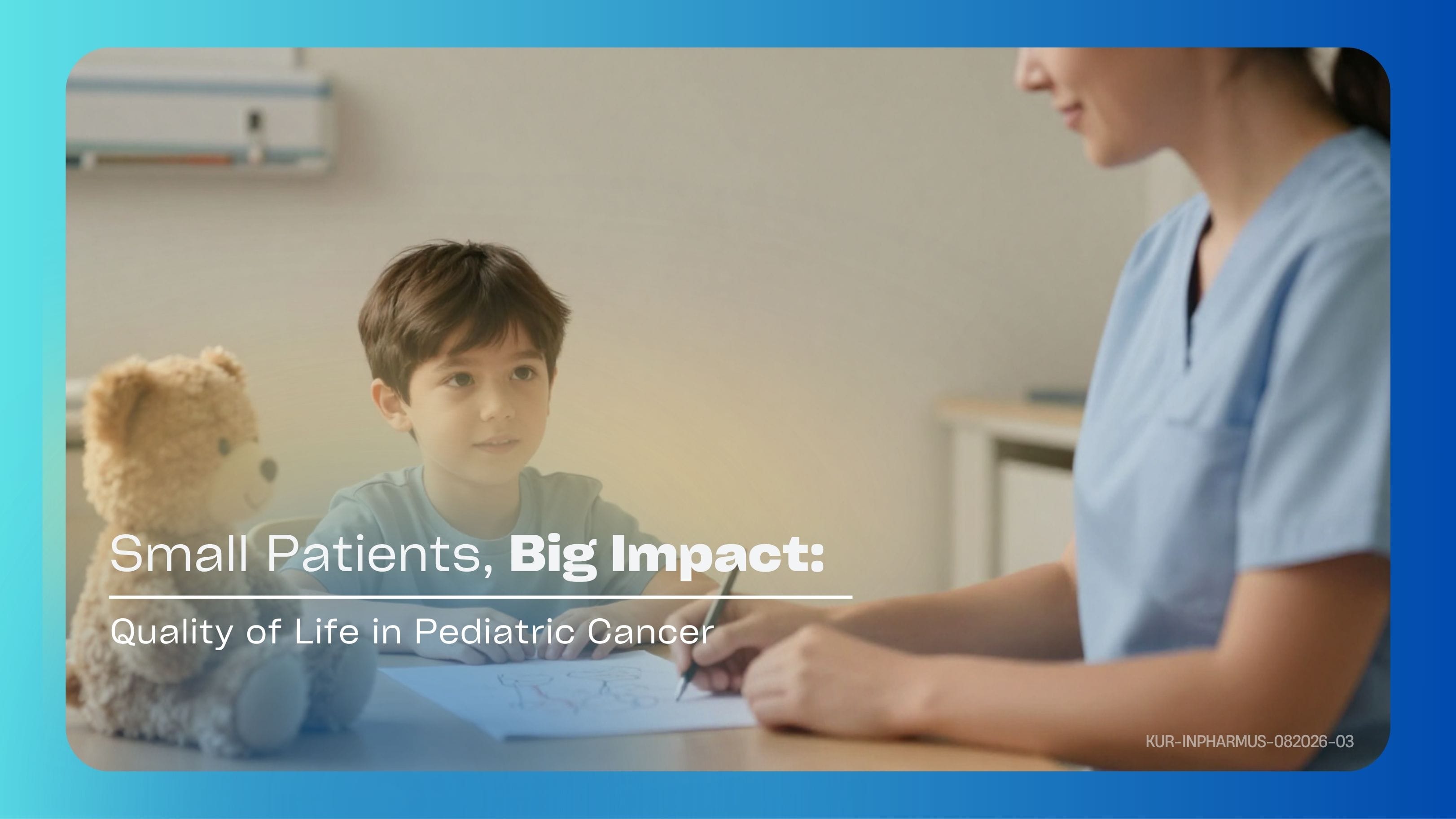

For a child diagnosed with cancer, the patient journey is about much more than treating a disease.
Childhood cancer can affect physical health, emotional well-being, relationships, education, independence, and everyday experiences, making health-related quality of life an essential part of pediatric oncology care (Rothmund et al., 2023).
Research increasingly recognizes that quality of life in children with cancer is multidimensional, encompassing physical, psychological, social, and treatment-related experiences rather than clinical outcomes alone (Rothmund et al., 2023).
Beyond Survival
Advances in childhood cancer diagnosis and treatment have created a growing population of survivors, placing greater attention on how children live during treatment and how they return to everyday life afterwards (Larsen et al., 2023).
Studies examining children during active cancer treatment have consistently identified impairments in health-related quality of life, particularly when compared with periods of remission or survivorship (Fakhry et al., 2013).
This means that successful pediatric cancer care cannot be understood through disease control alone. The physical, emotional, developmental, and social needs of the child also matter throughout the patient journey (Rothmund et al., 2023).
When Treatment Changes Everyday Life
For children, illness does not occur separately from childhood.
Daily life continues to include playing, learning, friendships, family relationships, and the development of independence.
Cancer and its treatment can introduce symptoms and treatment burdens that interfere with these everyday activities, affecting both physical functioning and psychological well-being (Rothmund et al., 2023).
Fatigue is one particularly important example. Children and adolescents with cancer have described fatigue as exhaustion, weakness, loss of energy, sleepiness, and reduced motivation, with consequences for normal activities and psychosocial well-being (Tomlinson et al., 2016).
For a young patient, therefore, treatment burden may not simply mean feeling physically unwell. It can mean being unable to participate in the activities that normally define childhood and adolescence (Tomlinson et al., 2016).
The Emotional Side of the Journey
The psychological experience of pediatric cancer can be complex and may change across diagnosis, treatment, recovery, and survivorship (Fakhry et al., 2013).
Health-related quality of life research in pediatric oncology includes concerns related to fear, emotional distress, uncertainty, self-image, treatment burden, and the ability to maintain a sense of normality during care (Rothmund et al., 2023).
Importantly, children do not experience cancer in isolation. Family relationships, communication, and the support available around the child can shape how young patients cope with the demands of illness and survivorship (Deegan et al., 2023).
A systematic review of childhood cancer survivors found that parents, family members, and friends are important sources of social support, with greater support associated with outcomes including lower psychological distress and more successful school re-entry (Deegan et al., 2023).
Cancer Does Not Pause Education
School represents far more than academic progress for a child. It is also an environment for friendship, identity development, independence, and social participation.
Cancer treatment can disrupt education through prolonged or repeated absences, physical and psychological changes, and interruption of relationships with classmates and teachers (Martinez-Santos et al., 2021).
A systematic review examining children’s return to school after cancer found that school re-entry can be challenging because of treatment-related effects, disrupted peer relationships, insufficient preparation, and communication gaps between healthcare teams, families, and schools (Martinez-Santos et al., 2021).
Maintaining contact with teachers and peers during treatment and providing appropriate support during the return to school have been identified as factors that may contribute to a more positive reintegration experience (Martinez-Santos et al., 2021).
Protecting quality of life in pediatric cancer therefore also means helping children remain connected to education, friendships, and the routines that give everyday life continuity.
Life After Treatment
For many children, completing cancer treatment does not mean that every consequence of the disease or its treatment ends at the same time.
Systematic reviews show that some childhood cancer survivors experience long-term physical and mental health effects that can influence quality of life years after treatment has ended (Larsen et al., 2023).
Evidence from European studies suggests that childhood cancer survivors as a group may report poorer quality of life than comparison populations, although outcomes differ substantially according to individual, disease, and treatment-related factors (Larsen et al., 2023).
Psychosocial late effects may involve educational, vocational, emotional, social, and relationship challenges, which is why long-term psychosocial assessment has been proposed as an important component of survivorship care (Lown et al., 2015).
At the same time, research also shows that many childhood cancer survivors adapt well, highlighting the importance of identifying the individuals who require additional support rather than assuming that every survivor will experience the same challenges (Lown et al., 2015).
Listening to the Child
Quality of life cannot be fully understood through laboratory results, imaging, or survival statistics.
Modern pediatric oncology increasingly incorporates patient-reported outcomes to understand how children themselves experience symptoms, treatment burden, emotional well-being, social life, and daily functioning (Rothmund et al., 2023).
A comprehensive systematic review identified dozens of patient-reported outcome measures used to capture the experiences of children with cancer, reflecting the broad and highly individual nature of quality of life in this population (Rothmund et al., 2023).
Listening to the child’s experience can therefore provide information that traditional clinical outcomes alone may not capture.
Caring for the Whole Childhood
Pediatric cancer care has made remarkable progress in helping more children move beyond their diagnosis (Larsen et al., 2023).
The next challenge is to ensure that progress in survival is accompanied by equal attention to how children feel, function, learn, connect, and develop throughout and after treatment (Rothmund et al., 2023; Lown et al., 2015).
Supporting physical health, emotional well-being, education, social connection, and long-term follow-up is not separate from cancer care. Together, these elements form a more complete understanding of what successful care can mean for a child (Rothmund et al., 2023; Martinez-Santos et al., 2021).
Because in pediatric oncology, the goal is not only to treat a disease.
It is also to protect the childhood that continues around it.
References
Rothmund M, Sodergren S, Rohde G, et al. Updating our understanding of health-related quality of life issues in children with cancer: a systematic review of patient-reported outcome measures and qualitative studies. Quality of Life Research. 2023;32(4):965-976.
https://pubmed.ncbi.nlm.nih.gov/36152110/
Fakhry H, Goldenberg M, Sayer G, et al. Health-related quality of life in childhood cancer. Journal of Developmental & Behavioral Pediatrics. 2013;34(6):419-440.
https://pubmed.ncbi.nlm.nih.gov/23838588/
Tomlinson D, Zupanec S, Jones H, et al. The lived experience of fatigue in children and adolescents with cancer: a systematic review. Supportive Care in Cancer. 2016;24(8):3623-3631.
https://pubmed.ncbi.nlm.nih.gov/27146495/
Martinez-Santos AE, Fernandez-De-La-Iglesia JC, Sheaf G, Coyne I. A systematic review of the educational experiences and needs of children with cancer returning to school. Journal of Advanced Nursing. 2021;77(7):2971-2994.
https://pubmed.ncbi.nlm.nih.gov/33598984/
Deegan A, Brennan C, Gallagher P, Lambert V, Dunne S. Social support and childhood cancer survivors: A systematic review (2006-2022). Psycho-Oncology. 2023;32(6):819-833.
https://pubmed.ncbi.nlm.nih.gov/36944590/
Lown EA, Phillips F, Schwartz LA, Rosenberg AR, Jones B. Psychosocial Follow-Up in Survivorship as a Standard of Care in Pediatric Oncology. Pediatric Blood & Cancer. 2015;62(Suppl 5):S514-S584.
https://pubmed.ncbi.nlm.nih.gov/26700918/
Larsen PA, Amidi A, Ghith N, Winther JF, Pedersen C. Quality of life of adolescent and adult survivors of childhood cancer in Europe: A systematic review. International Journal of Cancer. 2023;153(7):1356-1375.
https://pubmed.ncbi.nlm.nih.gov/37377041/