

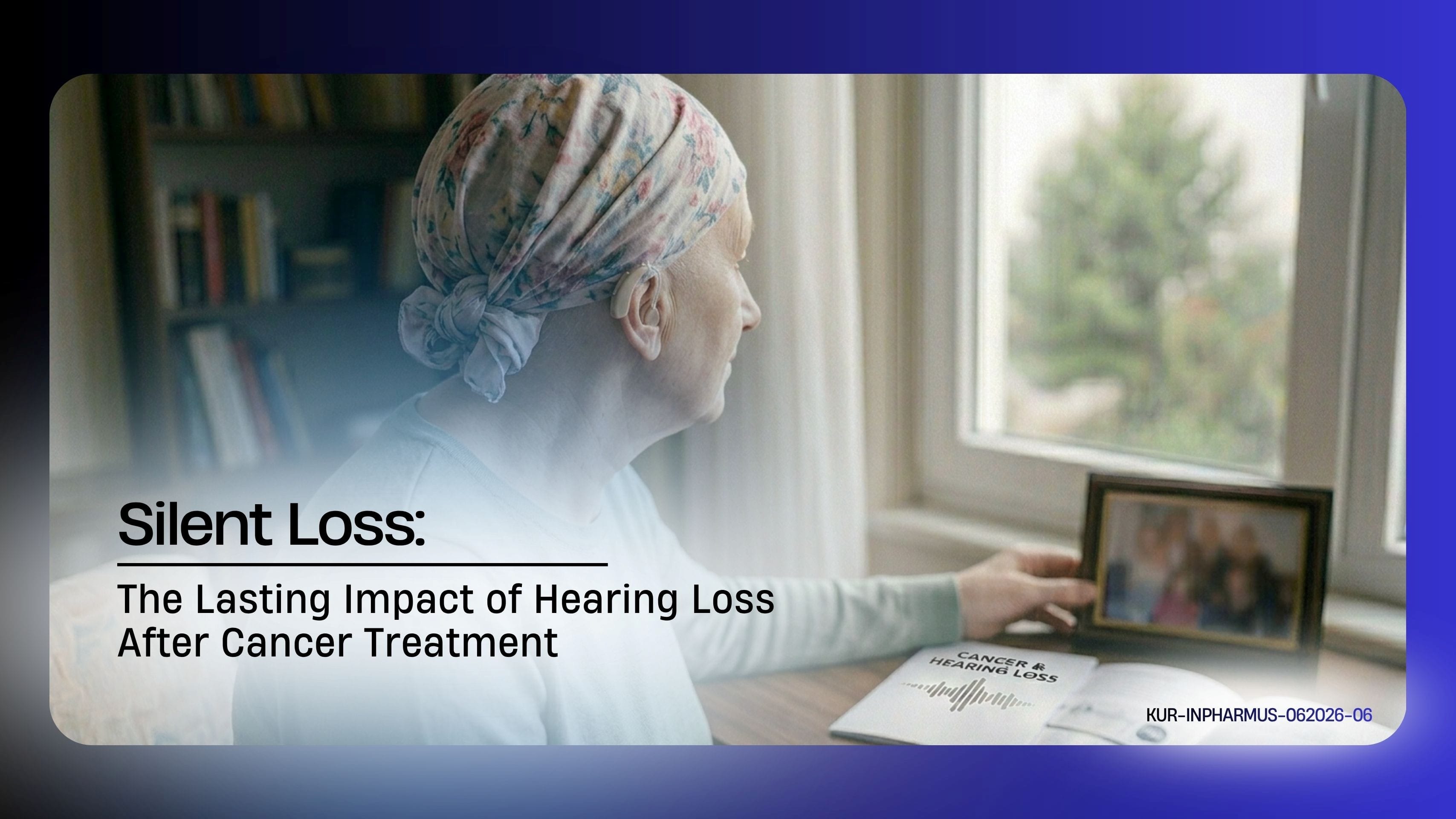

Advances in oncology have significantly improved survival outcomes across many cancer types, leading to a growing focus on long-term health and quality of life after treatment (Landier, 2016).
As survivorship becomes an increasingly important component of cancer care, attention is shifting toward treatment-related complications that may persist long after therapy has ended. Among these, hearing loss remains one of the most underrecognized yet potentially life-altering consequences of cancer treatment (Landier, 2016).
A Hidden Consequence of Cancer Therapy
Platinum-based chemotherapies, particularly cisplatin, remain a cornerstone of treatment for a wide range of adult and pediatric malignancies due to their proven efficacy and survival benefits (Rybak et al., 2015).
However, cisplatin is also one of the most well-established ototoxic agents in oncology. Ototoxicity refers to treatment-related damage to the inner ear that can result in permanent hearing impairment and tinnitus (Rybak et al., 2015).
Cisplatin-induced hearing loss is typically bilateral, sensorineural, and irreversible. It most commonly affects high-frequency hearing and may worsen with increasing cumulative exposure to treatment (Brock et al., 2012; Rybak et al., 2015).
Studies have reported hearing loss in up to 60% of children treated with platinum-based chemotherapy, making ototoxicity one of the most common long-term toxicities observed in pediatric oncology survivors (Brock et al., 2012).
Why Does Cisplatin Affect Hearing?
Research has demonstrated that cisplatin accumulates within the cochlea and may remain there long after treatment has ended. This persistence can contribute to ongoing cellular damage and may help explain why hearing loss can progress even after chemotherapy has been completed (Breglio et al., 2017).
Within the inner ear, cisplatin triggers oxidative stress, inflammation, and damage to sensory hair cells that are essential for hearing. Because these cells do not naturally regenerate in humans, the resulting hearing loss is often permanent (Rybak et al., 2015).
Several factors have been associated with a higher risk of ototoxicity, including younger age, higher cumulative cisplatin doses, concurrent cranial irradiation, and pre-existing hearing impairment (Brock et al., 2012).
The Unique Impact on Children
Although hearing loss can affect patients of all ages, its consequences may be particularly profound in children.
Hearing plays a fundamental role in speech and language development, educational achievement, and social interaction. Even mild hearing impairment can influence learning outcomes and communication skills during critical developmental periods (Knight et al., 2005).
As survival rates continue to improve in pediatric oncology, preserving hearing has become an important aspect of long-term survivorship care and quality-of-life management (Brock et al., 2012).
Looking Beyond Survival
The impact of treatment-related hearing loss extends beyond the auditory system. Difficulties understanding conversations, participating in social environments, and maintaining academic or professional performance can affect daily functioning and overall quality of life (Landier, 2016).
For many survivors, these challenges emerge only after treatment has ended, when the focus has already shifted from disease management to rebuilding everyday life. This makes hearing loss a frequently overlooked but clinically meaningful survivorship issue (Landier, 2016).
The Importance of Early Monitoring
Because cochlear damage is often irreversible, early detection remains critical.
Audiological monitoring before, during, and after treatment can help identify hearing changes at an early stage and support timely intervention strategies when appropriate (Brock et al., 2012).
Recognizing patients at increased risk and integrating hearing assessments into routine cancer care may help reduce the long-term burden associated with treatment-related ototoxicity (Brock et al., 2012).
A New Era of Otoprotection
For many years, preventing cisplatin-induced hearing loss remained a major unmet need.
A landmark phase III clinical trial demonstrated that sodium thiosulfate significantly reduced the incidence of cisplatin-associated hearing loss in children receiving treatment for localized cancers (Freyer et al., 2017).
These findings represented an important milestone in the field, highlighting the possibility of protecting hearing while maintaining the anticancer benefits of platinum-based therapy (Freyer et al., 2017).
Conclusion
Modern cancer care is no longer defined solely by survival.
As the number of cancer survivors continues to grow, increasing attention is being directed toward long-term treatment outcomes and quality of life after therapy (Landier, 2016).
Treatment-related hearing loss serves as a powerful reminder that survivorship extends beyond disease control. Protecting hearing health may help ensure that survivors are not only living longer, but also able to fully participate in the lives they return to after cancer treatment.
References
Cisplatin Cochlear Retention Study (Breglio et al., 2017): https://pubmed.ncbi.nlm.nih.gov/29162831/
Platinum-Induced Ototoxicity Consensus Review (Brock et al., 2012): https://pubmed.ncbi.nlm.nih.gov/22547603/
Sodium Thiosulfate Otoprotection Trial (Freyer et al., 2017): https://pubmed.ncbi.nlm.nih.gov/27914822/
Pediatric Ototoxicity Study (Knight et al., 2005): https://pubmed.ncbi.nlm.nih.gov/16314621/
Ototoxicity and Cancer Therapy Review (Landier, 2016): https://pubmed.ncbi.nlm.nih.gov/26859792/
Cisplatin-Induced Ototoxicity Review (Rybak et al., 2015): https://pmc.ncbi.nlm.nih.gov/articles/PMC5606684/